Updated on November 16, 2026 · By the Smart Picks UAE team
Smart Picks UAE is reader-supported. As an Amazon Associate we earn from qualifying purchases, at no extra cost to you. Read our affiliate disclosure.
Short answer: Flat vs adjustable bench: which should you buy?
For most home gyms, an adjustable bench is the better buy, because incline and upright positions add shoulder, upper-chest and seated work using the same dumbbells. Choose a flat bench if you mainly flat press, want maximum stability for the money, or need the lightest, most compact option for a small flat.
If you are setting up a corner of your apartment for dumbbell training, the first big decision is usually the bench (we review six models in our guide to the best weight bench for home). Flat vs adjustable bench sounds like a simple choice, but it affects which exercises you can do, how stable your presses feel and how much floor space you give up. In this guide we compare both types honestly, with a table, a checklist and our advice for small UAE flats with tiled floors. If you already know which type you want, skip ahead to the buying checklist.
How we wrote this: we compared the specifications of the most popular flat and adjustable benches sold on Amazon.ae, looked at what verified buyers repeatedly praise and complain about, and drew on common strength-coaching practice and our experience setting up home gyms in UAE apartments. If you have a shoulder, back or other health condition, ask a doctor or physiotherapist before starting a new programme.
Flat vs Adjustable Bench: What Is the Difference?
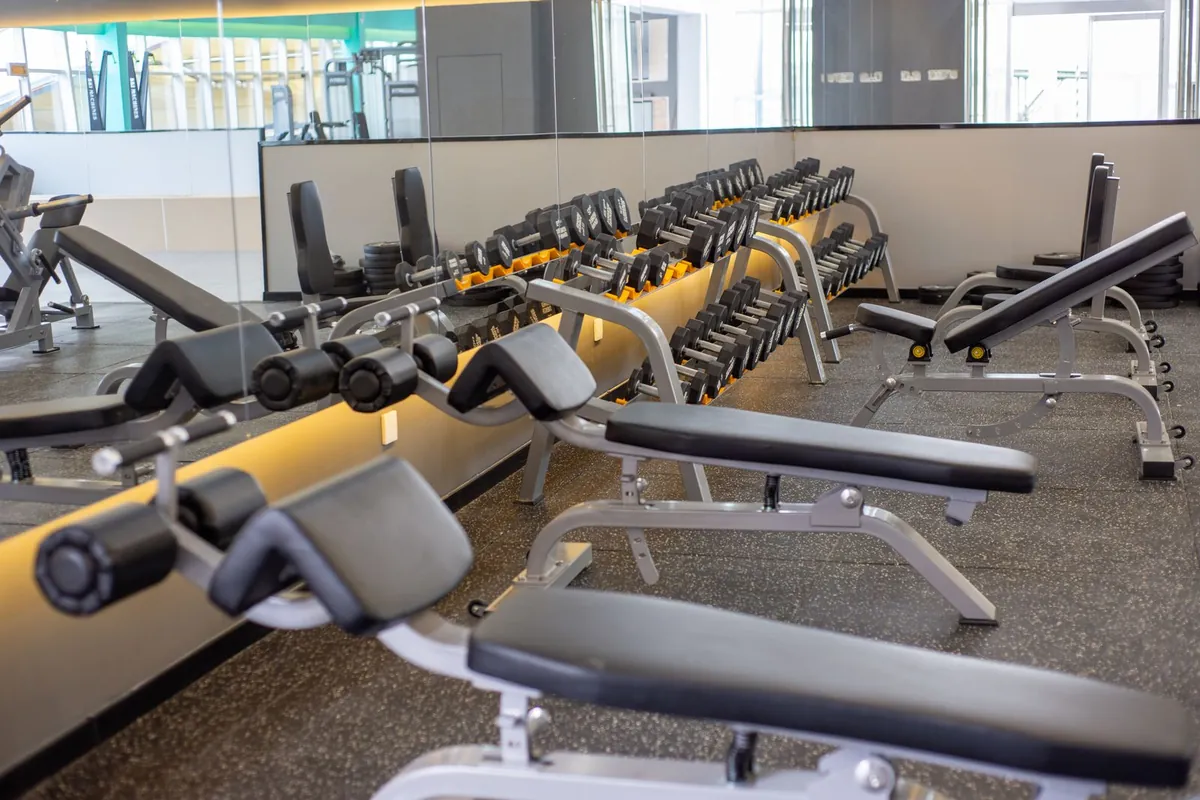
A flat bench is a single padded board on a fixed steel frame. It stays horizontal and does not move. That simplicity is its strength: there is no hinge, no gap between the seat and back pad, and very little that can rattle loose. Flat benches are also usually lighter, cheaper and narrower, and many can stand on one end in a cupboard or behind a door.
An adjustable bench (sometimes called an FID bench, for flat, incline and decline) has a back pad that you can set at several angles, typically flat, around 15, 30, 45 and 60 degrees, and fully upright. Many also have an adjustable seat to stop you sliding down when you incline. Some fold in half for storage. The trade-off is more moving parts, more weight and, on cheaper models, a little more wobble and a gap in the middle of the pad when it is flat.
Flat vs Adjustable Weight Bench: Side-by-Side Comparison
Here is how the two types usually compare. These are typical patterns across popular models; individual benches vary, so always check the listing.
| Feature | Flat bench | Adjustable bench |
|---|---|---|
| Positions | 1 (flat) | Usually 5–8 back angles, often plus decline and seat settings |
| Stability at the same price | Very high, no hinge or seat gap | Good to very good; budget models can wobble |
| Exercises covered | Flat press, rows, step-ups, hip thrusts, split squats | All flat moves plus incline press, seated shoulder press, seated curls, decline core work |
| Typical weight of the bench | About 8–15 kg | About 15–30 kg |
| Footprint (L x W) | About 110–120 x 30–50 cm | About 120–135 x 50–65 cm |
| Storage | Light; many stand on end | Heavier; foldable models fold in half |
| Price tier on Amazon.ae | Budget | Budget to mid; heavy-duty models cost more |
| Best for | Beginners on a budget, heavy flat pressing, tiny rooms | Most home dumbbell users who want variety from one bench |
Weights and sizes are typical ranges from popular listings, not exact figures for any one bench. Prices change, check Amazon.ae for current prices.
Flat or Adjustable Bench: Which Is Better for a Home Gym?
When weighing up flat vs adjustable bench for home gym use, start with how you train. For most people training at home with dumbbells, the honest answer is an adjustable bench. A home gym usually has limited equipment, so each piece needs to do as much as possible. With an adjustable bench, the same pair of dumbbells covers flat presses, incline presses, seated shoulder presses, seated curls, chest-supported rows and step-ups. That variety makes it easier to train every muscle group with a small set of weights, which matters if you are still working out what size dumbbells you should buy.
A flat bench wins in three situations. First, if your programme is mostly flat pressing, rows, hip thrusts and Bulgarian split squats, you are paying for angles you will rarely use. Second, if your budget is tight, a solid flat bench such as the Amazon Basics flat weight bench gives more stability per dirham than a cheap adjustable model. Third, if you press heavy barbells in a rack, the solid pad and lack of a seat gap feel more secure.
A simple way to decide: list the ten exercises you actually do each week. If more than two of them are incline or seated moves, buy adjustable. If none are, a flat bench is enough.
Is a Flat Bench More Stable Than an Adjustable Bench?
At the same price, usually yes. Stability comes from a wide base, thick steel and a rigid frame. A flat bench has all of its strength in one fixed piece, while an adjustable bench has to put some of its strength into the hinge, the ladder or pop-pin and the seat bracket. Each of those joints is a place where play can develop over time.
That does not mean adjustable benches are unsafe. Well-made models with a wide rear foot, a small pad gap and a clear maximum user weight feel very solid in the flat position. The problems tend to appear at the budget end, where buyers mention side-to-side rocking or a pad gap that digs into the lower back. If you want an adjustable bench with a reputation for a sturdy frame, the Marcy SB-228 utility bench is a popular, long-running model to compare against cheaper options.
On tiled UAE floors, stability also depends on the surface. Marble and porcelain are slippery and can be slightly uneven, so a bench on bare tiles may slide or rock. A firm rubber or high-density EVA mat underneath fixes most of this, and protects the tiles if a dumbbell drops.
Do You Need an Incline Bench for Your Upper Chest and Shoulders?
You do not strictly need one. Flat presses and push-ups train the whole chest, and you can press overhead standing. But an incline position of around 30–45 degrees shifts more of the work to the upper chest and front shoulders, and a seated upright position supports your back so you can press with less strain on the lower back. For people who care about upper-body shape, these angles are the main reason to choose adjustable.
An adjustable bench also makes some moves easier and safer for beginners. Chest-supported dumbbell rows on an incline take strain off the lower back, and incline push-ups with your hands on the bench are a useful step towards full push-ups; see our guide on how to do a push-up for a full progression.
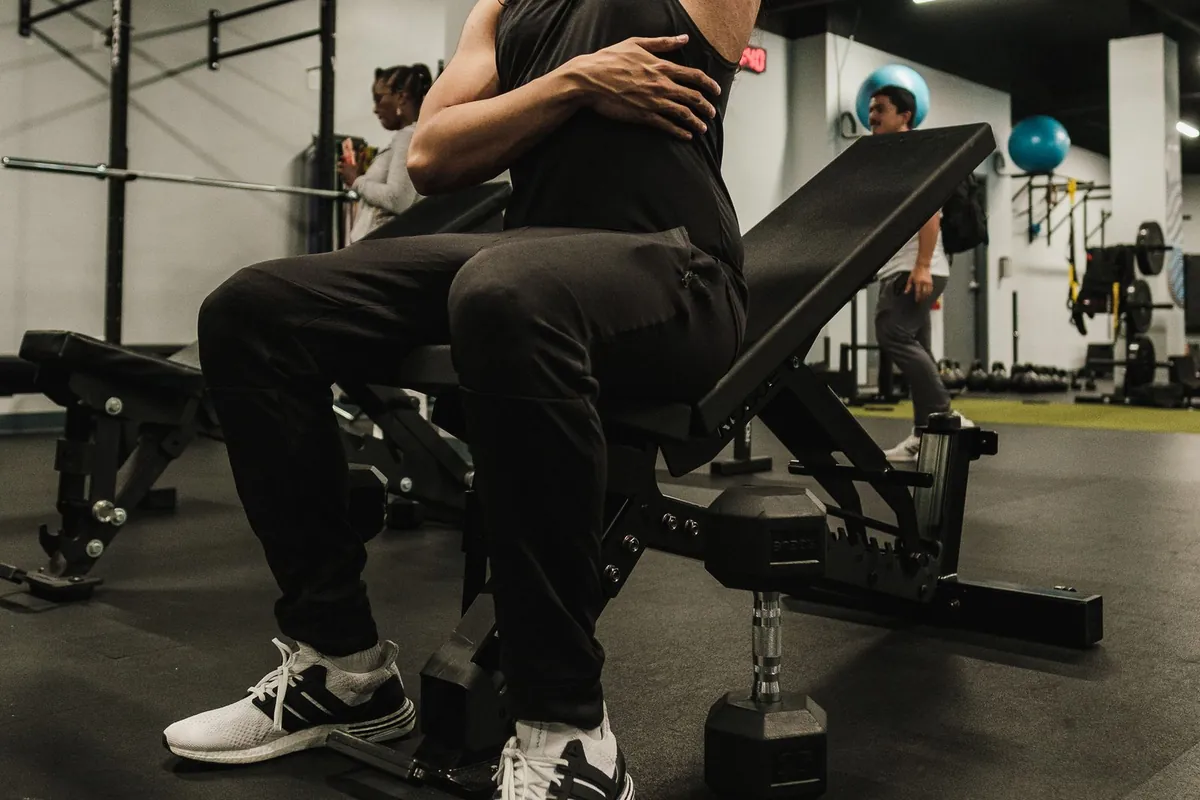
Flat Bench or Adjustable Bench for Home Gym Use in a Small UAE Flat?
Space is where many UAE buyers settle the flat or adjustable bench question. Most of us rent apartments, often with tiled floors, neighbours below and no spare room. Here is how each type fits:
- Studio or one-bedroom flat: a flat bench is easiest. It weighs less, and many models can stand upright against a wall or slide under a bed.
- Two-bedroom flat or villa room: an adjustable bench is worth the extra space. A foldable model, such as the PASYOU foldable adjustable bench, folds roughly in half for storage.
- Renting: neither type needs drilling, which is a plus. Just protect the floor with a mat and keep the original box for moving day.
- Neighbours below: benches themselves are quiet. The noise comes from dropping dumbbells. Lower weights under control and use a thick mat; our tips on reducing noise for downstairs neighbours apply here too.
Measure before you order. You need the bench footprint plus enough room to lie down, put your feet flat and lower dumbbells to the sides, so roughly 2 metres by 1.5 metres of clear floor. For more ideas on fitting a gym into a small space, see our home gym equipment for apartments guide.
What Can You Do on Each Bench?
| Exercise | Flat bench | Adjustable bench |
|---|---|---|
| Flat dumbbell or barbell press | Yes | Yes |
| Incline press (upper chest) | No | Yes |
| Seated shoulder press | Only without back support | Yes, upright position |
| One-arm dumbbell row | Yes | Yes |
| Chest-supported row | No | Yes, on incline |
| Hip thrusts and glute bridges | Yes | Yes (flat) |
| Bulgarian split squats and step-ups | Yes | Yes (check stability) |
| Seated or incline curls | Seated only | Yes |
| Decline sit-ups | No | Only if it has decline and leg holder |
If you are new to strength training, a simple three-day plan with presses, rows, split squats and hip thrusts covers most of your needs; our dumbbell exercises for beginners guide shows you how, and pairs well with a good set from our best dumbbells in UAE roundup.
Flat vs Adjustable Weight Bench: Buying Checklist
- ☑ Pick the type from your exercise list: incline or seated moves mean adjustable.
- ☑ Check the maximum user weight, not just the headline load figure. Add your body weight to the heaviest dumbbells you will press, then leave headroom.
- ☑ Look for a wide base and rubber feet; levelling feet help on uneven tiles.
- ☑ On adjustable benches, check the seat-to-back pad gap and that the seat adjusts too.
- ☑ Measure your space: the bench plus about 2 x 1.5 m of clear floor.
- ☑ If storage is tight, choose a flat bench that stands on end or a foldable adjustable bench.
- ☑ Prefer listings sold or fulfilled by Amazon.ae for easier returns of a heavy item.
- ☑ Budget for a floor mat to protect tiles and reduce noise.
Our Verdict: Which One Should You Buy?
Buy an adjustable bench if you train with dumbbells at home, want incline and seated presses, and have room for a slightly larger, heavier bench. It is the better all-round value for most home gyms.
Buy a flat bench if you mostly flat press, row and hip thrust, if you are on a tight budget, if you live in a studio, or if you press heavy barbells in a rack and want the most solid pad. You can always add an adjustable bench later.
Whichever side of the flat vs adjustable bench choice you land on, stability and a realistic weight capacity matter more than extra features such as decline settings or leg holders.
Helpful Gear
- Amazon Basics flat weight bench — a simple, stable flat bench that stands on end for storage; no incline or seated options.
Check Price on Amazon → - PASYOU foldable adjustable bench — a popular budget adjustable bench that folds for small flats; not built for very heavy barbell work.
Check Price on Amazon → - JOROTO MD60 adjustable bench — a heavier-duty adjustable frame with incline and decline; bigger and pricier than budget models.
Check Price on Amazon → - PROIRON 2 cm interlocking floor mats — protect tiles and reduce noise under a bench and dumbbells; foam, so not for dropped barbells.
Check Price on Amazon →
Prices change, so check Amazon.ae for the current price and delivery date.
For full reviews of six benches, including stability notes and pad gaps, read our guide to the best weight bench for home.
Frequently Asked Questions
Is a flat or adjustable bench better for a home gym?
For most people an adjustable bench is better, because one bench covers flat, incline and seated exercises. A flat bench is the better choice if you mainly do flat presses, rows and hip thrusts, are on a tight budget, or want the most stable surface for heavy barbell pressing.
Is a flat bench more stable than an adjustable bench?
Usually, yes. A flat bench has no hinge, no seat gap and fewer moving parts, so it tends to feel more solid at the same price. A well-built adjustable bench can be just as stable when flat, but budget adjustable models are where wobble and pad gaps most often appear.
Do I need an incline bench to build my upper chest?
You do not strictly need one, because flat presses and push-ups train the whole chest. But an incline of about 30–45 degrees shifts more work to the upper chest and front shoulders, so an adjustable bench makes it easier to train that area directly.
Can I use an adjustable bench for heavy bench press?
Yes, if it has a high weight capacity, a small seat gap and a stable, wide base. For very heavy barbell work in a rack, many lifters still prefer a dedicated flat bench. Check the maximum user weight, which matters more than the headline load number.
How much space does a weight bench need in an apartment?
A typical bench is about 110–130 cm long and 30–65 cm wide, but you need room around it to lie down, move your arms and set dumbbells on the floor. Plan for roughly 2 x 1.5 metres of clear floor. Foldable adjustable benches and flat benches that stand on end are easiest to store.
Is a decline setting worth paying for?
For most home users, no. Decline is mainly used for decline presses and some core moves, and many people never use it. Prioritise stability, flat and incline positions, pad comfort and weight capacity. Treat decline as a bonus, not a must-have.
The Bottom Line
In the flat vs adjustable bench debate, there is no wrong answer, only the wrong bench for your exercises and your space. If you are still torn on flat vs adjustable bench for home gym training, remember that most home lifters in the UAE get more from an adjustable bench, while a flat bench is the smart, stable pick for small flats, tight budgets and heavy flat pressing. Decide from your exercise list, measure your floor, put a mat down to protect your tiles, and then compare our top picks in the best weight bench for home guide.