Updated on November 14, 2026 · By the Smart Picks UAE team
Smart Picks UAE is reader-supported. As an Amazon Associate we earn from qualifying purchases, at no extra cost to you. Read our affiliate disclosure.
Worried about walking pad noise downstairs? You are not alone. Most of us in the UAE live in apartments with hard porcelain or marble tiles laid straight onto a concrete slab, and that floor carries every footstep to the flat below. The good news is that you rarely need to stop walking: a few simple changes can cut the thud and hum to a level most neighbours will not notice. If you are still choosing a machine, start with our guide to the best walking pad in the UAE, which lists quieter models for apartments and standing desks.
Quick answer — how to stop walking pad noise downstairs
- Put the pad on a dense treadmill mat, not bare tile.
- Add a layer of firm rubber or EVA tiles and anti-vibration pads underneath.
- Move it away from shared walls and away from the room above your neighbour’s bedroom.
- Walk, don’t jog: keep the speed moderate and land softly in cushioned shoes.
- Lubricate the belt and tighten loose screws so nothing slaps or squeaks.
- Avoid late-night and early-morning sessions, and follow your building’s quiet hours.
- Talk to your downstairs neighbour and do a quick sound test together.
- If you are buying, choose a pad with a low motor noise rating and good shock absorption.
How we wrote this: we combined manufacturer guidance on walking pad setup, common acoustic advice on impact noise in apartments, owner feedback on Amazon.ae listings and our own experience with home cardio machines on tiled floors. We have not lab-tested noise in every building, and results vary with the slab, tiles and ceiling below.
Why Walking Pad Noise Travels Downstairs
There are two kinds of sound coming from a walking pad, and they behave very differently:
- Airborne noise is the motor hum and belt whir you hear in your own room. Walls and floors block a lot of it, so your downstairs neighbour usually hears little of it.
- Impact (structure-borne) noise is the thud of each step and the vibration of the deck. It goes straight into the floor and travels through the concrete slab, then the ceiling below acts like a speaker. This is what neighbours complain about.
UAE apartments make impact noise worse in a few ways. Tiles are hard and thin, so they pass vibration almost directly into the slab. Many flats have no carpet at all. And the ceiling below is often a gypsum false ceiling with an empty space above it, which can boom with low-frequency thumps. That is why the fixes below focus on stopping vibration before it reaches the tiles, not just on making the motor quieter.
Walking Pad Noise Downstairs: 8 Fixes for UAE Apartments
Start with fixes 1 to 4. They cost little and solve most complaints. Add the rest if your neighbour still hears you.
1. Put a dense walking pad mat under it (never bare tile)
A proper walking pad mat is the single most useful upgrade. It spreads the load, stops the pad sliding on glossy tiles, protects the floor from scratches and soaks up some vibration. Choose a firm, high-density PVC or rubber mat at least as long and wide as the pad. A soft yoga mat is too squishy: it compresses unevenly and can make the deck rock. The Amazon Basics high-density treadmill mat is a simple, inexpensive starting point that is sold and shipped by Amazon.ae.
2. Build a walking pad noise reduction “sandwich”
For real walking pad noise reduction, use layers instead of one thick mat. A setup that works well on tiles is:
- Bottom: firm interlocking floor tiles (about 1.5–2 cm EVA or rubber) to break the direct contact with the tiles.
- Middle: your dense treadmill mat for a flat, stable surface.
- Under the feet of the pad: small anti-vibration pads, which absorb the vibration at the exact points where the frame touches the floor.
Thick interlocking tiles such as these PROIRON 2 cm interlocking floor mats also give you a soft zone for stretching after your walk. Keep the stack firm: if the walking pad visibly sinks or wobbles when you step on it, the layers are too soft, and the pad will feel unstable and wear faster.
3. Move it to a better spot in the flat
Where you put the pad matters almost as much as what is under it. Keep it at least a few centimetres from walls and furniture, because touching surfaces rattle and carry vibration into the structure. Avoid the area directly above your neighbour’s bedroom if you can work out the layout (flats in the same tower usually stack the same way). Many people find the living room or a home office corner over a hallway or kitchen below works best.
4. Change how you walk
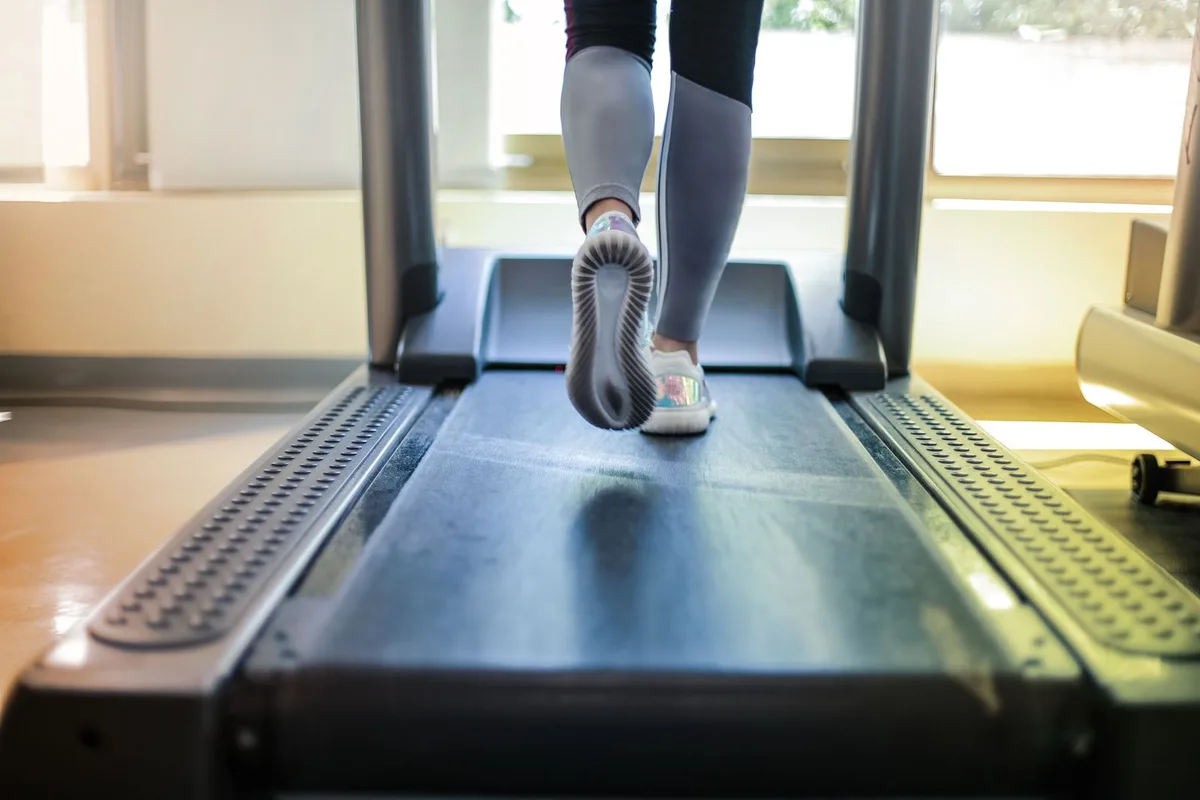
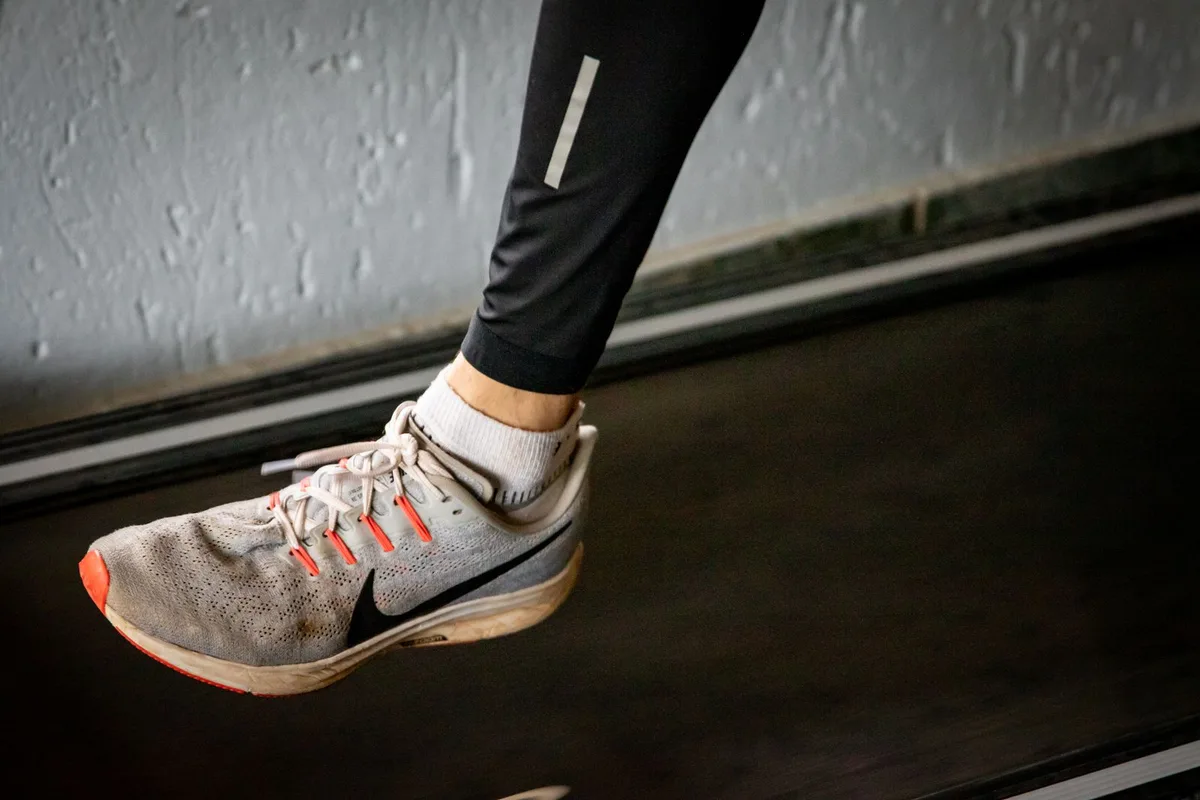
Footstrike is the biggest source of thuds. Walk with short, light steps and avoid slamming your heels down. Wear cushioned trainers rather than walking barefoot or in hard-soled shoes. Keep the speed in a comfortable walking range: impact noise rises sharply when you start jogging, and most walking pads are designed for walking anyway. If you want running workouts, a full treadmill with a stronger deck is the better tool; our guide to the best treadmills in the UAE explains what to look for.
5. Maintain the belt, deck and screws
Some noise only shows up after a few months of use: squeaks, clicks and a slapping belt. Lubricate the belt with silicone oil as the manual recommends, centre the belt if it drifts, and check the tension so it does not slip. Tighten any screws on the frame and the motor cover. A well-maintained pad runs smoother and quieter, and the motor lasts longer, especially in dusty UAE weather.
6. Pick the right time
Even a quiet setup is more noticeable when the building is silent. Avoid sessions late at night and very early in the morning, when neighbours are sleeping and there is no traffic or AC noise to mask the sound. Many residential towers in Dubai, Abu Dhabi and Sharjah publish quiet hours or general noise rules in their community guidelines, so check yours with building management. Midday and early evening are usually the safest times.
7. Talk to your downstairs neighbour (and test together)
A friendly chat often prevents a formal complaint. Tell them you have a walking pad, ask if they hear anything, and offer a two-minute test: you walk at your normal speed while they listen from their flat, then you add the mat or change the spot and repeat. Exchanging phone numbers means they can message you directly instead of going to the building manager.
8. Choose a quieter walking pad if you are buying
If your pad is old or rattly, a newer model can help. Look for a low quoted motor noise level, several silicone or rubber shock absorbers under the deck, a solid steel frame and a speed range aimed at walking. The UREVO smart walking pad lists sub-45 dB motor noise and six silicone shock absorbers, which is why it is the quietest pick in our walking pad buying guide. Any pad will still need a mat on tiles, though.
Walking Pad Noise Apartment Checklist
| Noise you hear | Likely cause | Fix |
|---|---|---|
| Thud with every step (downstairs hears it) | Impact noise through tiles and slab | Dense mat + interlocking tiles + anti-vibration pads; lighter steps; walk, don’t jog |
| Low hum or buzzing | Motor vibration passing into the floor | Anti-vibration pads under the feet; move away from walls |
| Rattle or clicking | Loose screws, motor cover or remote holder | Tighten all screws; keep the pad clear of furniture |
| Squeak or slapping belt | Dry or loose belt | Lubricate with silicone oil; adjust tension and centre the belt |
| Pad slides on tiles | No grip on glossy porcelain | Treadmill mat with a grippy underside |
Walking Pad Downstairs Neighbour Complain? What to Do
If your downstairs neighbour complains, take it seriously but don’t panic. Most complaints about walking pad noise downstairs are about timing and footstep thuds, which you can fix in a day.
- Pause and listen. Ask what they hear (thuds, hum, rattle) and at what time. That tells you which fix to try first.
- Fix the floor first. Add the mat-and-tiles setup above, then ask them if it made a difference.
- Agree on times. Offer a window that suits them, such as after they leave for work or before dinner.
- Keep sessions shorter. Two or three 20-minute walks spread through the day are often less annoying than one long session.
- Check your building rules. If the complaint goes to building management, being able to show that you use a mat, follow quiet hours and talked to your neighbour helps a lot.
How to Measure Your Walking Pad Noise Level
You do not need special equipment. Install a free decibel meter app on your phone and take three readings: the room with the pad off, the pad running with nobody on it, and you walking at your usual speed. Repeat after adding each fix. Phone apps are not precise, but they are good for comparing before and after. Better still, ask a family member to stand in the flat below (or in the corridor near the floor) and tell you what they hear. Walking pad noise downstairs is often louder than it seems from on top of the deck.
Quiet Alternatives If Noise Is Still a Problem
If your building is unusually noisy, or you live above someone who works night shifts, a different low-impact machine may suit you better. An under-desk bike is almost silent because there is no footstrike. A mini stepper is compact, though it still creates some rhythmic impact. For more space-saving ideas, see our guide to home gym equipment for apartments. And in summer, keep the room air-conditioned and read our tips on exercising safely in UAE heat.
Helpful Gear to Quieten a Walking Pad
- Amazon Basics high-density treadmill mat — a firm PVC mat that stops sliding and protects tiles; a good first layer for most walking pads.
Check Price on Amazon → - PROIRON 2 cm interlocking floor mats — thick EVA tiles to go under the mat; they add decoupling but take up a little more floor space.
Check Price on Amazon → - Silicone anti-vibration pads (4 pcs) — small double-sided pads for the frame feet; cheap and helpful, but not enough on their own.
Check Price on Amazon → - UREVO smart walking pad — a quieter pad with silicone shock absorbers, worth a look only if you are replacing an old or noisy one.
Check Price on Amazon →
Prices change, so check Amazon.ae for the current price and delivery date.
Frequently Asked Questions
Can downstairs neighbours hear a walking pad?
Yes, often. The motor is fairly quiet, but each footstep sends a small thud and vibration into the floor slab, and that impact noise travels down to the flat below much more than the hum you hear in your own room. On bare tile it is usually noticeable downstairs; on a dense mat with anti-vibration pads underneath it drops to a low background sound for most people.
Does a mat under a walking pad reduce noise?
A dense walking pad mat reduces noise, mainly the vibration and rattle passed into the floor, and stops the pad sliding on tiles. It works best as part of a layered setup: firm rubber or EVA tiles first, then a treadmill mat, with the walking pad on top. A thin yoga mat on its own makes little difference to what your downstairs neighbour hears.
What is a normal walking pad noise level?
Many listings quote motor noise of roughly 45–60 dB, measured close to the machine. In a real flat the walking pad noise level you hear depends far more on your footsteps, speed, shoes and floor than on the motor number. Walking at 3–5 km/h in cushioned shoes is much quieter than jogging.
What time can I use a walking pad in a UAE apartment?
There is no single rule for every building, so check your tenancy contract or the community rules from your owners association or building management. Many towers ask residents to keep noise down late at night and early in the morning. Daytime and early evening sessions are the safest choice, especially if you are above a bedroom.
Is a walking pad quieter than a treadmill?
Usually, yes. Walking pads have smaller motors, lower top speeds and no tall frame to rattle, and you walk rather than run. A full treadmill used for jogging creates much more impact noise. If you plan to run, read our treadmill guide and plan stronger floor protection.
Which walking pad is the quietest?
Look for a pad that lists a low motor noise figure, a cushioned deck with several silicone or rubber shock absorbers, a solid steel frame and a speed range that suits walking. In our best walking pad guide, the UREVO model is our quietest pick, but any pad will still need a mat on tile floors.
The Bottom Line
Walking pad noise downstairs is mostly impact noise from your steps, not motor noise, and tiled UAE floors make it travel. Put the pad on a dense mat with firm tiles and anti-vibration pads underneath, keep it away from walls, walk lightly at a moderate speed, maintain the belt and respect your building’s quiet hours. Most neighbours will then hear little or nothing. If you are still choosing a machine, compare quieter options in our best walking pad UAE guide.