Updated on November 5, 2026 · By the Smart Picks UAE team
Smart Picks UAE is reader-supported. As an Amazon Associate we earn from qualifying purchases, at no extra cost to you. Read our affiliate disclosure.
Quick answer
To exercise in UAE heat safely, train early in the morning or after sunset. Build up your heat tolerance over 10 to 14 days. Start well hydrated and replace salt on long sessions. Wear light, breathable clothing, and cut your intensity by 10 to 20% on hot, humid days. If you feel dizzy, sick, confused or stop sweating, stop at once and cool down. From June to September, move hard sessions indoors.
Training in the UAE comes with a challenge most fitness advice ignores. For about five months of the year, daytime temperatures often pass 40°C, and coastal cities such as Dubai, Sharjah and Abu Dhabi add high humidity. That combination makes it harder for your body to cool itself through sweat. Exercise that feels easy in January can push you towards heat illness in August.
The good news is that you do not need to stop training. With the right timing, gradual acclimatisation, good hydration and a sensible indoor back-up plan, you can stay consistent all year. This guide explains how heat affects your body and how to exercise in UAE heat without losing fitness: step-by-step outdoor rules, plus how to keep progressing indoors when it is simply too hot.
This article is general information, not medical advice. If you have a heart condition, diabetes, high blood pressure, are pregnant, or take medication such as diuretics, speak to your doctor before exercising in hot conditions.
How Heat Affects Your Body During Exercise
Working muscles produce a lot of heat. To keep your core temperature safe, your body sends more blood to the skin and makes you sweat, so heat can escape as the sweat evaporates. In hot weather two things go wrong:
- Your heart works harder. Blood is split between your muscles and your skin, so your heart rate climbs higher than normal at the same pace. That is why an easy 6-minute-per-km run can feel like a race in summer.
- Humidity blocks cooling. When the air is already full of moisture, sweat drips off instead of evaporating, and you lose fluid without cooling down. That is why humid coastal mornings can be more dangerous than dry desert afternoons with a similar temperature.
The World Health Organization notes that heat stress can cause heat exhaustion and heatstroke and can worsen existing heart, lung and kidney conditions. Athletes and outdoor workers are among the groups most at risk.
Heat exhaustion vs heatstroke
According to the NHS, heat exhaustion is not usually serious if you can cool down within 30 minutes. Heatstroke, however, is a medical emergency.
| Heat exhaustion | Heatstroke | |
|---|---|---|
| Typical signs | Headache, dizziness, nausea, heavy sweating, cramps, fast pulse, extreme tiredness | Confusion, slurred speech, fits, loss of consciousness, hot skin, may stop sweating |
| What to do | Stop, move to shade or AC, lie down with legs raised, drink water or an electrolyte drink, cool the skin | Call 999 (UAE ambulance), cool the person aggressively while waiting, do not give fluids if they are not fully alert |
| Seriousness | Usually improves within 30 minutes | Life-threatening |
Those risks are why a clear plan matters before you exercise in UAE heat outdoors.
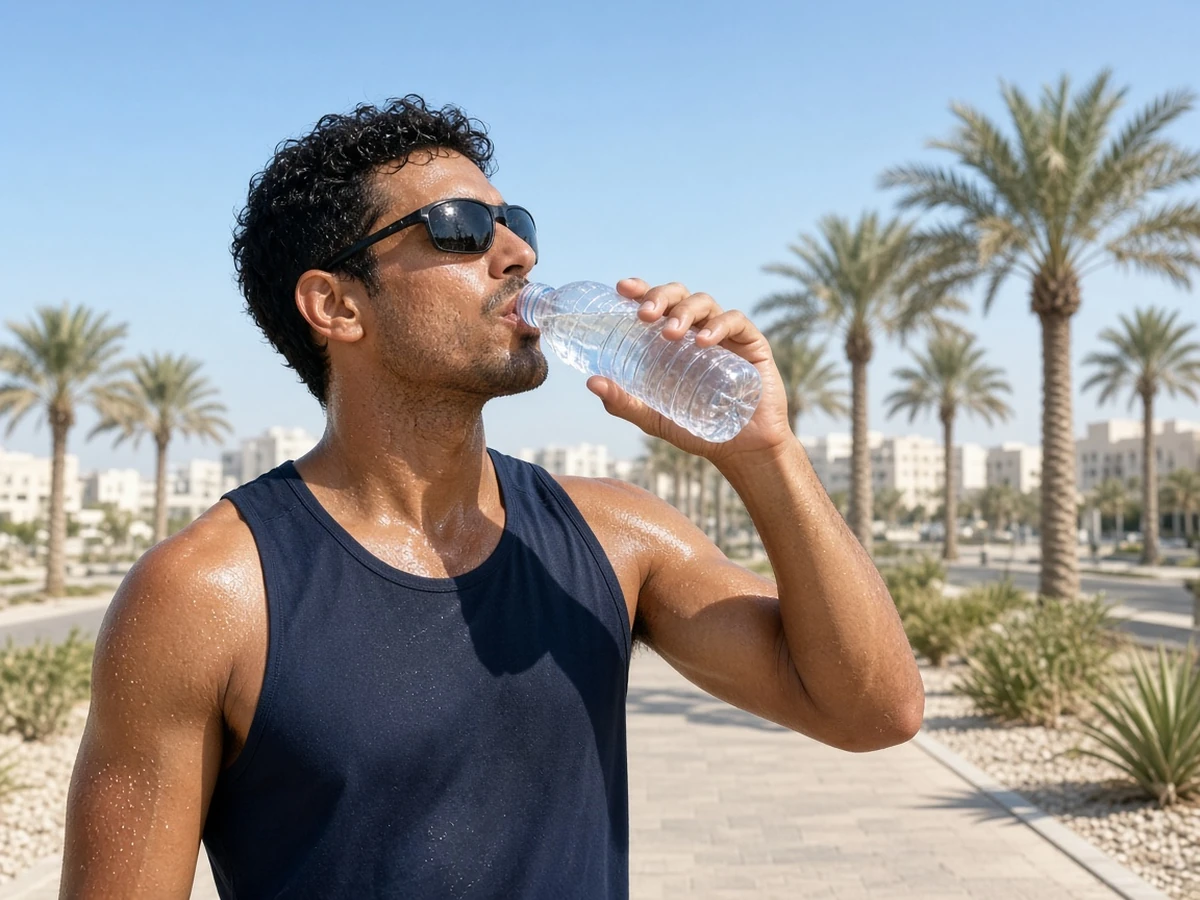
Step 1: Best Time to Exercise in Dubai and UAE Heat
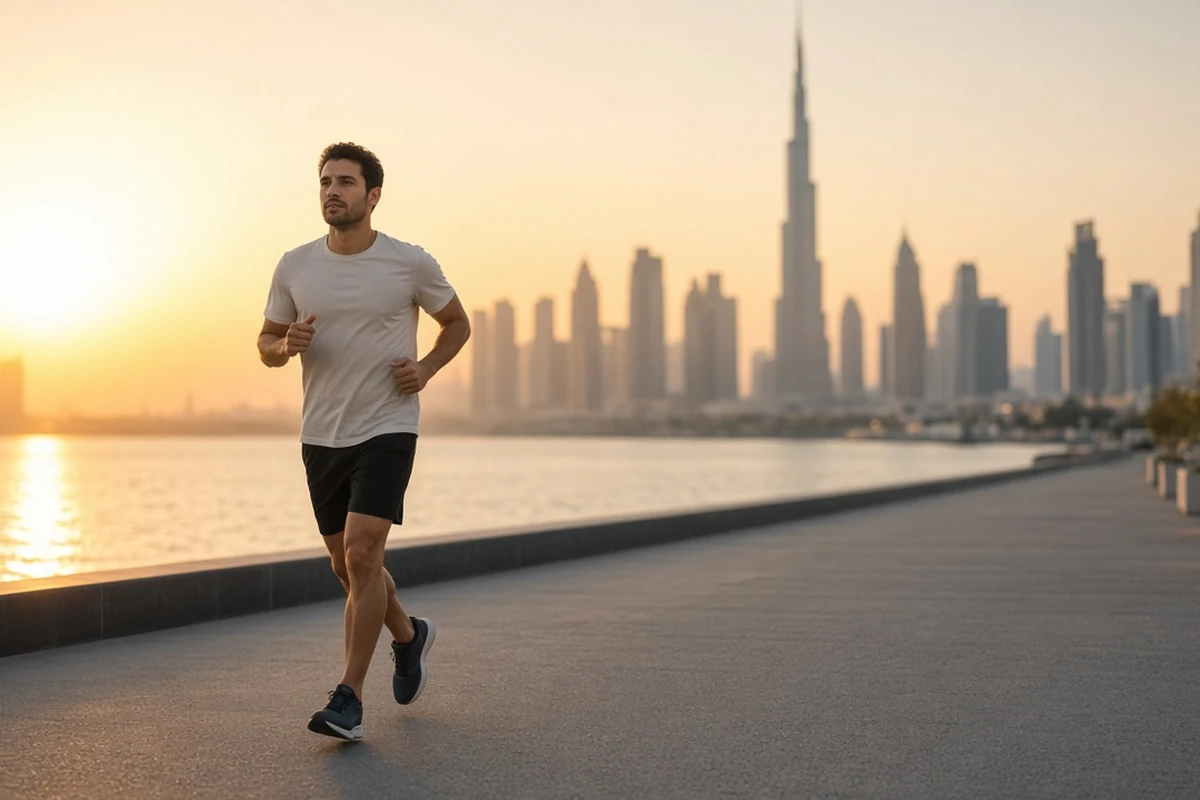
Timing is the single biggest lever you have if you want to exercise in UAE heat. Knowing the best time to exercise in Dubai (and across the UAE) matters more than any fancy gear. In summer, temperatures in most UAE cities are at their lowest just before sunrise, and the sun’s radiant heat adds a lot once it is up.
- Best: roughly 4:30 to 7:30 AM in summer. Aim to finish before the sun is high.
- Second best: after sunset (from about 7:30 PM). It is darker and the air is cooler, but asphalt, sand and buildings release stored heat, so it can still feel very warm.
- Avoid: about 10 AM to 4 PM outdoors from May to September, especially for running in Dubai heat, cycling or HIIT. Midday is also the riskiest window for most outdoor exercise Dubai runners and walkers attempt in parks or on the Corniche.
Check the forecast for both temperature and humidity on the National Center of Meteorology app or any weather app. Many coaches use a simple rule: if the “feels like” temperature is above about 38°C, move hard sessions indoors.
Step 2: Acclimatise Gradually Over 10 to 14 Days
Your body can adapt when you regularly exercise in UAE heat. With repeated exposure you start sweating earlier and more, lose less salt in your sweat, increase your blood plasma volume, and reach a lower heart rate at the same effort. A review in the Scandinavian Journal of Medicine & Science in Sports (Périard, Racinais and Sawka, 2015) found that most of these adaptations develop within about 1 to 2 weeks of regular heat exposure.
If you are new to the UAE, back from a cool-climate holiday, or returning after time off, follow this simple plan:
| Days | Outdoor session length | Intensity |
|---|---|---|
| 1–3 | 15–20 minutes | Easy: you can talk in full sentences |
| 4–7 | 20–35 minutes | Easy, with a few short moderate efforts |
| 8–14 | 35–60 minutes | Build back towards normal, still cutting the pace on very humid days |
The adaptation fades after a few weeks without heat, so even in summer try to include 2 or 3 short, easy outdoor or warm-room sessions each week if you are healthy.
Step 3: Hydrate Before, During and After
Dehydration makes heat strain worse when you exercise in UAE heat: your heart rate rises and your ability to cool falls. Yet drinking far more than you need can also be harmful, because it dilutes the sodium in your blood. Aim for balance:
- Before: drink a glass or two of water in the 2 hours before training, and start with pale-yellow urine.
- During: sip regularly, roughly every 15 to 20 minutes, guided by thirst. Carry an insulated water bottle (keeps drinks cold for hours in the heat) or plan your route past water points.
- Electrolytes: for sessions over 60 minutes, or if you are a “salty sweater” (white marks on clothing), use an electrolyte drink or electrolyte tablets to replace sodium.
- After: weigh yourself before and after a long session. Each kilogram lost is roughly a litre of fluid to replace gradually over the next few hours.
The Mayo Clinic also recommends avoiding alcohol around training and being careful with high-caffeine pre-workouts in hot weather.
Step 4: Adjust Intensity and Duration
Expect to be slower when you exercise in UAE heat. That is normal physiology, not lost fitness. Instead of chasing your usual pace:
- Train by effort or heart rate. Keep easy days truly easy. A smartwatch can help you monitor effort, but do not use a device reading to ignore symptoms.
- Cut intensity by 10–20% on hot or humid days, and shorten intervals or take longer rests.
- Split sessions. Two 25-minute sessions in the cool hours are safer than one 50-minute session that runs into the heat.
- Save races and personal bests for the cooler months, roughly November to March, when the UAE event calendar is busiest anyway.
Step 5: Dress for Cooling
What you wear changes how hard it feels to exercise in UAE heat.
- Choose light-coloured, loose, moisture-wicking fabrics rather than cotton, which holds sweat.
- Wear a breathable mesh sport cap or visor and UV-protective sunglasses. Use a sweat-resistant SPF 30+ sunscreen, as sunburn reduces your skin’s ability to cool.
- Breathable, well-cushioned shoes matter on hot pavement.
- Pre-cooling helps on long sessions: a cold drink or ice slush before you start, and a damp cooling towel around the neck.
When outdoor conditions are unsuitable, compare home-gym equipment for UAE apartments or see our walking-pad buying guide for indoor options.
Step 6: Build an Indoor Plan for Peak Summer
From June to September, an indoor routine is often safer than trying to exercise in UAE heat at midday. You do not need a full gym. A small air-conditioned corner works well:
- Cardio: a walking pad or full treadmill lets you keep your steps and runs going. Set a 1% incline to mimic outdoor effort.
- Strength: adjustable dumbbells and resistance bands cover almost every muscle group. See our apartment home gym guide for space-saving setups.
- Mall walking and indoor tracks: many UAE malls and community centres allow early-morning walking before shops open.
- Swimming: pool water can get very warm in midsummer, so shaded or temperature-controlled pools are best.
Even indoors, keep a fan running and a bottle nearby. Sweat rates stay high in a warm apartment.
Sample Weekly Plan for UAE Summer
Use this as a template when running in Dubai summer forces more indoor days: keep two easy outdoor sessions early, and move harder work into air-conditioning.
| Day | Session | Where and when |
|---|---|---|
| Mon | 30-min easy run or brisk walk | Outdoors, before 7 AM |
| Tue | Full-body strength, 40 min | Indoors, AC |
| Wed | Intervals on treadmill, 30 min | Indoors |
| Thu | Mobility or yoga, 30 min | Indoors |
| Fri | Long easy walk or run, 45–60 min | Outdoors pre-sunrise, with electrolytes |
| Sat | Strength + core, 40 min | Indoors |
| Sun | Rest or easy swim | Shaded pool or rest |
Who Should Take Extra Care?
Some people are more sensitive to heat and should be extra cautious before they exercise in UAE heat, or get medical advice first:
- Adults over 65 and children
- People with heart, kidney or lung disease, diabetes or high blood pressure
- Anyone taking diuretics, some blood-pressure drugs, antihistamines or certain mental-health medicines
- Pregnant women
- People who are unwell, poorly slept, or recovering from a fever or stomach bug
- Those new to the UAE climate
The CDC heat and health guidance lists similar higher-risk groups.
Helpful gear for training in UAE heat
Prices change often — always check Amazon.ae for the current price before you buy.
- Insulated sports water bottle — Keeps water cold through outdoor sessions when shade is scarce.
Check price on Amazon.ae → - Nuun Sport electrolyte tablets — Light, low-sugar way to replace sodium on sessions over about an hour.
Check price on Amazon.ae → - Cooling towel — Soak, wring and wear around the neck for quick evaporative cooling.
Check price on Amazon.ae → - Breathable mesh sport cap — Shades your face and lets heat escape better than a heavy cotton hat.
Check price on Amazon.ae →
Frequently Asked Questions
Is it safe to exercise in UAE heat outdoors?
Yes, you can exercise in UAE heat outdoors, but only with care. From roughly May to September, midday heat and humidity make hard outdoor sessions risky. Train before sunrise or after sunset, keep sessions shorter and easier, drink regularly, and move indoors when it is very hot or humid.
What is the best time to exercise in Dubai?
Early morning, ideally finishing before about 8 AM in summer, is usually the coolest and least humid window in Dubai and Abu Dhabi. Late evening after sunset is the next best choice, although pavements and buildings release stored heat for hours.
How much water should I drink when training in hot weather?
There is no single number for everyone. Start sessions well hydrated, sip regularly during exercise, and rehydrate afterwards. Pale-yellow urine is a simple guide. For sessions over an hour or with heavy sweating, a drink with electrolytes helps replace the salt you lose.
How long does it take to acclimatise to the heat?
Research shows most adaptation happens within about 1 to 2 weeks of regular, gradually increasing exercise in the heat, with useful changes starting within the first few days. The adaptation fades again after a few weeks without heat exposure.
What are the warning signs of heat exhaustion?
Headache, dizziness, nausea, heavy sweating, cramps, fast breathing or pulse, and feeling unusually tired or weak. Stop, move somewhere cool, lie down with your legs raised, and drink water. If you do not improve within 30 minutes, or if you become confused or stop sweating, call 999 in the UAE because this may be heatstroke.
Is indoor training on a treadmill as good as running outside?
For fitness, yes. A treadmill or walking pad in an air-conditioned room lets you keep your training consistent all summer. Setting a 1% incline roughly makes up for the lack of wind resistance.
The Bottom Line: How to Exercise in UAE Heat Safely
Knowing how to exercise in UAE heat should change how you train, not whether you train. Pick the coolest hours, acclimatise over about two weeks, drink and replace salt sensibly, and lower your intensity on hot, humid days. Know the warning signs and act on them straight away. When summer peaks, take your cardio and strength work indoors. Then, when the cooler season arrives, you will be fitter and ready to perform.
Sources
- World Health Organization: Heat and health
- NHS: Heat exhaustion and heatstroke
- Mayo Clinic: Heat and exercise – keeping cool in hot weather
- CDC: Heat and health
- Périard JD, Racinais S, Sawka MN. Adaptations and mechanisms of human heat acclimation. Scand J Med Sci Sports, 2015
- Racinais S, et al. Consensus recommendations on training and competing in the heat. Br J Sports Med, 2015