Updated on November 15, 2026 · By the Smart Picks UAE team
Smart Picks UAE is reader-supported. As an Amazon Associate we earn from qualifying purchases, at no extra cost to you. Read our affiliate disclosure.
Standing in front of a wall of dumbbells, or scrolling a long list on Amazon.ae, it is easy to freeze and wonder: what size dumbbells should I buy? Buy too light and you will be bored in a fortnight; buy too heavy and your form falls apart. The good news is that you do not need a whole rack. In this guide we explain how to pick the right kg for your level and your exercises, with simple charts for beginners, women and men. If you already know your numbers and want product picks, go straight to our guide to the best dumbbells in UAE.
Quick answer — what size dumbbells should I buy?
- Beginner women: start with about 2 kg, 4 kg and 6 kg pairs (or one 4–5 kg pair if you can only buy one).
- Beginner men: start with about 5 kg, 8 kg and 12 kg pairs (or one 8 kg pair).
- Legs need heavier weights than arms, often two to three times more.
- The right weight lets you do 8–12 clean reps with the last two feeling hard.
- Need more than three pairs? An adjustable set is usually cheaper and saves space.
How we wrote this: we based the ranges below on widely used strength-training guidance (8–12 reps per set for general fitness, gradual 2–10% load increases), common coaching practice and our own experience setting up home gyms in UAE apartments. They are starting points, not rules. Your age, training history and any injuries matter, so check with a doctor or physiotherapist first if you have a health condition.
What Size Dumbbells Should I Buy? Start With the 8–12 Rep Test
Before looking at any chart, learn the simple test that coaches use. The right dumbbell for an exercise is the heaviest one you can lift for your target number of reps with good form, where the last two reps feel genuinely hard but you could still do one or two more if you had to. Trainers call this “reps in reserve”.
- If you can do 15+ easy reps, the weight is too light for building strength.
- If your form breaks before rep 8 (swinging, arching your back, shrugging), it is too heavy.
- If reps 9–12 are slow but clean, you have found the right weight.
This is why there is no single answer to “what weight dumbbells should I use”. A weight that is perfect for a biceps curl will feel like nothing in a goblet squat, and a weight that suits your squat will be far too heavy for lateral raises. Your shopping list should cover the exercises you actually plan to do.
What Size Dumbbells Should I Start With? Weights by Exercise
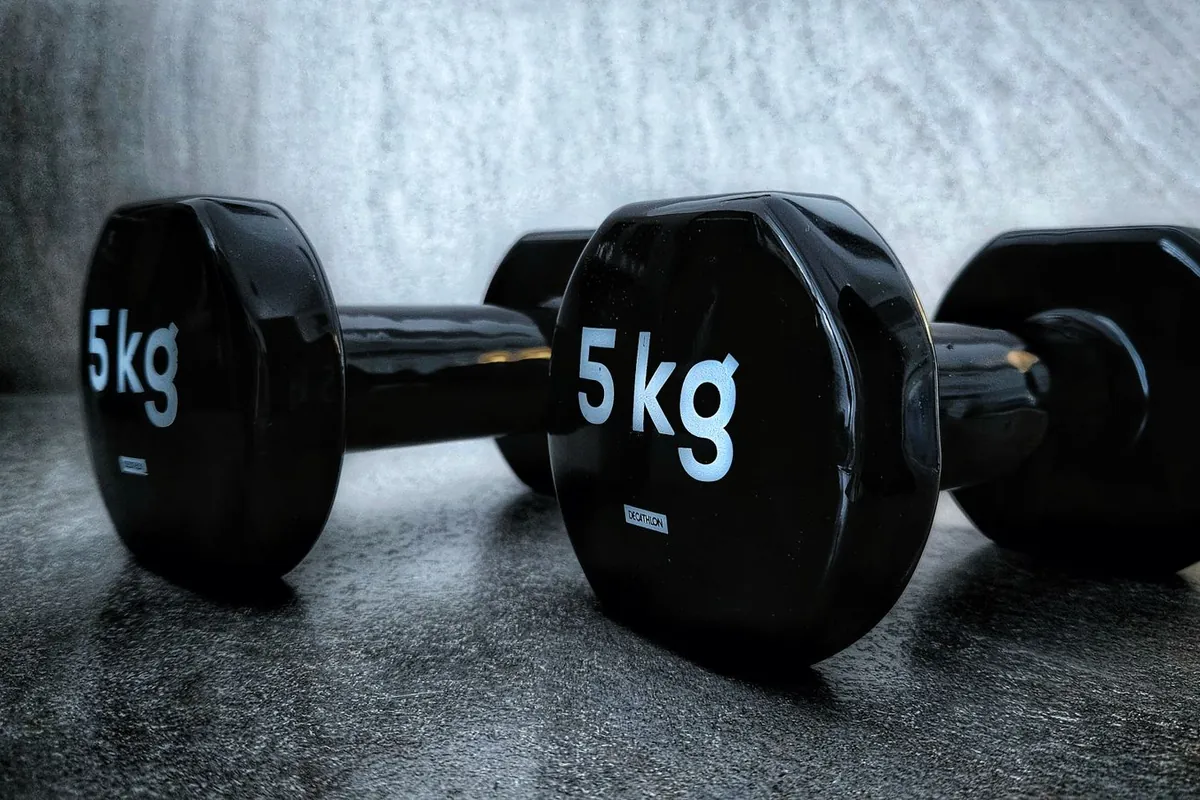
Small muscles (shoulders, triceps) need the lightest weights, arms and upper back need a little more, and big lower-body muscles need the most. If you are asking what size dumbbells should I start with, use this chart as a starting point for the first 4–8 weeks, per dumbbell:
| Exercise type | Examples | Beginner women (per hand) | Beginner men (per hand) |
|---|---|---|---|
| Small shoulder and arm moves | Lateral raise, front raise, triceps kickback | 1–3 kg | 2–5 kg |
| Arms and shoulders | Biceps curl, hammer curl, shoulder press | 2–5 kg | 5–10 kg |
| Upper back and chest | One-arm row, floor press, bench press | 4–8 kg | 8–14 kg |
| Legs and hips | Goblet squat, Romanian deadlift, reverse lunge | 6–12 kg | 10–20 kg |
| Core | Dead bug, weighted crunch, farmer carry | 2–5 kg (carries heavier) | 4–8 kg (carries heavier) |
Ranges are typical starting points for healthy adults who are new to weights. Fitter or bigger beginners may start at the top of a range; older adults or anyone returning from injury may start below it.
Notice the gap between the first and last rows. That is the main reason beginners end up with the wrong set: they buy one pair that suits curls, then find squats feel too easy. If you want a ready-made routine to test these numbers, try the 3-day plan in our dumbbell exercises for beginners guide.
Best Dumbbell Weight for Beginners: How Many Pairs to Buy
The best dumbbell weight for beginners is really a small set of weights. Three pairs cover almost every move in a beginner full-body plan:
- Light pair for lateral raises, triceps and rehab-style shoulder work.
- Medium pair for curls, shoulder presses and rows.
- Heavy pair (or a single heavy dumbbell for goblet squats) for legs and hip hinges.
| Your situation | Suggested fixed pairs | If buying adjustable |
|---|---|---|
| Beginner woman, general fitness | 2 kg + 4 kg + 6 kg (or 3 + 5 + 8 kg) | Set that goes up to about 12–15 kg per hand |
| Beginner man, general fitness | 5 kg + 8 kg + 12 kg (or 6 + 10 + 14 kg) | Set that goes up to about 20–25 kg per hand |
| Older adult or returning from injury | 1 kg + 2 kg + 4 kg | Light set with small 0.5–1 kg steps |
| Already training, wants muscle | Too many pairs needed | Set up to 25–32 kg per hand, ideally more |
| Pilates, barre or toning classes | 1 kg + 2 kg | Not needed |
If your budget only stretches to one pair, choose the medium weight. You can make it harder for legs with slower reps, pauses and single-leg moves, and easier for shoulders by doing fewer reps. Colour-coded neoprene pairs such as these PROIRON neoprene dumbbells (1–10 kg options) are an inexpensive way to build a light and medium pair over time.
What Size Dumbbells Should a Woman Use (kg)?
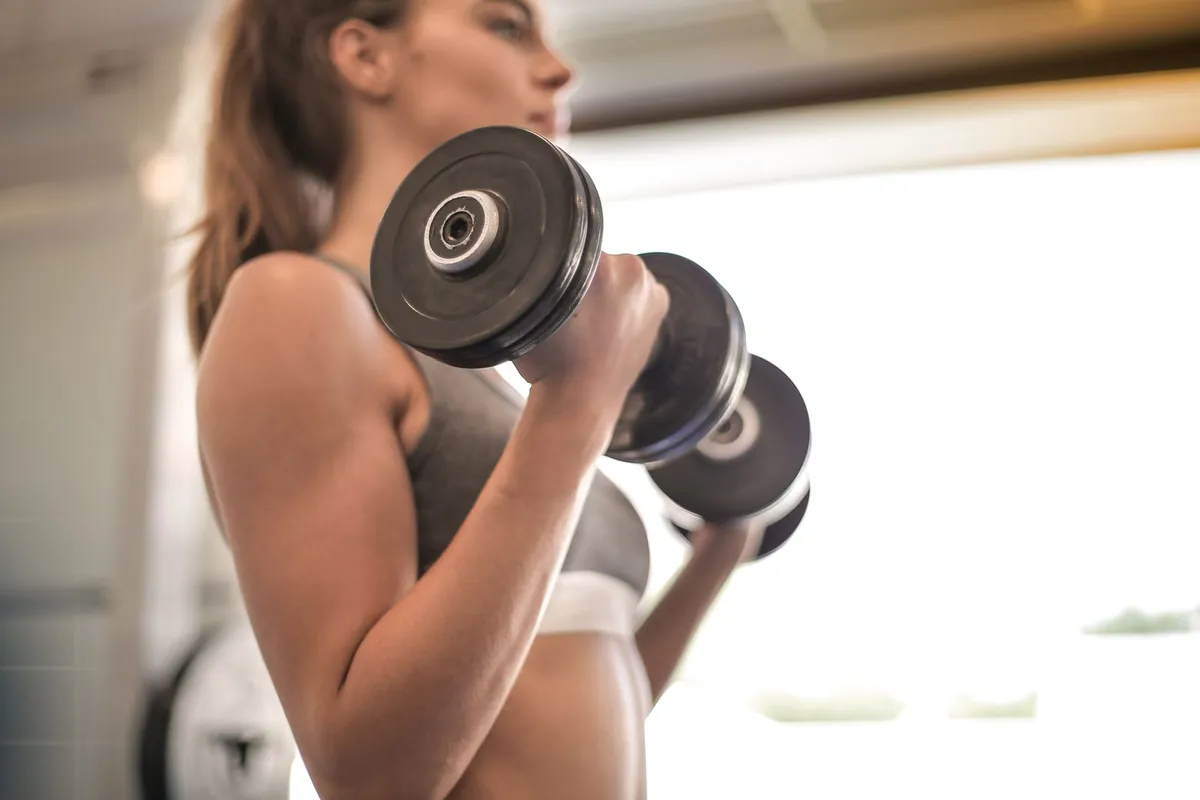
Many women are told to buy pink 1 kg dumbbells and do high reps. Those light weights have a place, but most women are stronger than they think and progress quickly once they start. So, how heavy should dumbbells be for women? Use the same 8–12 rep test as everyone else. In practice, for a beginner that usually looks like:
- 1–2 kg: lateral raises, front raises, Pilates and barre classes, warm-ups.
- 3–5 kg: biceps curls, shoulder presses, triceps extensions and rows in the first weeks.
- 6–10 kg: goblet squats, Romanian deadlifts, lunges and glute bridges. Many women move past 10 kg for these within a few months.
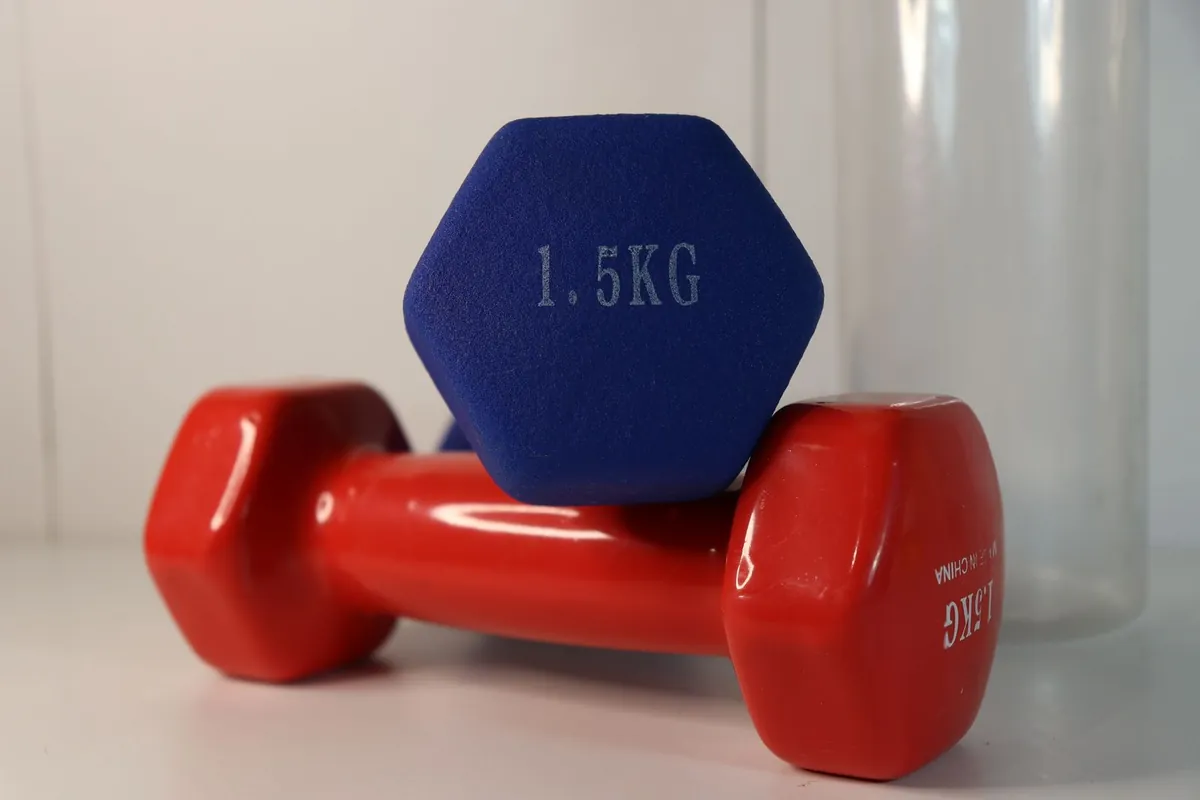
Toning arms is not about tiny weights. The “toned” look comes from building a little muscle and losing some fat, and that needs enough resistance to make the last reps hard. If you train mainly at home, a neoprene pair with a hexagonal end, like this Amazon Basics neoprene hex dumbbell pair, will not roll on tiled UAE floors and is comfortable with sweaty hands.
What Weight Dumbbells Should I Use? (Men, kg)
For men new to lifting, a common mistake is the opposite: buying heavy 15–20 kg fixed dumbbells straight away and then struggling to press them with good form. Start with the 8–12 rep test, and expect roughly:
- 4–6 kg: lateral raises, rear-delt flys and triceps kickbacks.
- 8–12 kg: curls, shoulder presses and one-arm rows at the start.
- 12–20 kg: goblet squats, Romanian deadlifts, lunges and floor presses.
Men with some training history usually want 20 kg or more per hand within a year, and 30 kg+ for heavy rows and leg work. At that point fixed pairs get expensive and take up a lot of floor space, which is why most people in UAE apartments switch to an adjustable set. Our dumbbell buying guide compares options by weight range.
What Size Dumbbells for Weight Loss, Pilates and Toning?
For weight loss: choose weights that make 8–15 reps hard and do full-body circuits two or three times a week. Weight loss comes mostly from diet and daily movement; strength work helps you keep muscle while the scale drops. Pair it with walking or the routines in our full-body exercises for weight loss guide.
For Pilates and barre: 0.5–2 kg is normal. These classes use many reps and long holds, so even light weights feel hard.
For toning arms: use the same weights as for strength (2–5 kg for many women, 5–10 kg for many men to start) and add weight as you get stronger. Lifting heavier will not make you bulky by accident; building noticeable size takes years of deliberate training and eating.
Fixed vs Adjustable: Which Type Should You Buy?
Once you know your numbers, the type is a budget and space question:
| Fixed dumbbell pairs | Adjustable dumbbells | |
|---|---|---|
| Best for | Beginners needing 2–3 weights; classes; quick circuits | Anyone needing many weights or more than about 15 kg |
| Cost | Low per pair, but adds up fast | Higher up front, cheaper than a full rack |
| Space | Needs a rack or shelf as you add pairs | One compact pair, about a 60 × 45 cm footprint |
| Speed of changing weight | Instant | A few seconds (dial, pin or twist) |
| Durability | Very high; fine to set down firmly | Mechanisms can break if dropped |
For the full comparison of specific adjustable sets, including dial, pin and plate-loaded types, see our guide to the best adjustable dumbbells in the UAE. If you go the fixed route and plan to collect several pairs, rubber hex dumbbells like these PROIRON rubber hex dumbbells are tough, quiet on tiles and come in many kg options.
How to Progress: When to Buy Heavier Dumbbells
Progressive overload simply means asking your muscles to do a little more over time. A simple rule many coaches use is the “2-for-2” rule:
- Pick a target, such as 3 sets of 10 reps.
- When you can do two extra reps (12) on your last set in two sessions in a row, increase the weight.
- Go up by the smallest step available: about 1–2 kg for upper-body moves and 2–4 kg for lower-body moves.
- Drop back to the bottom of your rep range (8 reps) with the new weight and build up again.
Most beginners need their next pair of dumbbells after 6–12 weeks of consistent training, especially for legs. Before you buy, you can also make a weight harder by slowing the lowering phase to three seconds, adding a pause, or switching to a single-leg version. These tricks are useful in a small flat where space for extra pairs is limited.
UAE Tips: Space, Floors and Heat
- Protect tiled floors: marble and porcelain chip easily. Train on a rubber mat and lower weights under control.
- Choose coated dumbbells for humidity: bare cast iron can rust on balconies and in non-air-conditioned storerooms in Dubai and Abu Dhabi. Neoprene, vinyl or rubber coatings cope better.
- Plan storage early: three pairs fit on a small shelf; more need a rack. An apartment home gym setup keeps everything tidy.
- Train indoors in summer: heavy lifting in 40°C+ heat is not worth the risk. See our tips on exercising safely in UAE heat.
Helpful Gear
- Amazon Basics neoprene dumbbell pair — a simple, grippy light pair sold and shipped by Amazon.ae; great for shoulders and classes, too light for legs.
Check Price on Amazon → - SONGMICS 3-pair dumbbell set with stand (1, 2, 3 kg) — an easy starter set for beginner women, Pilates or seniors; most people outgrow it for squats.
Check Price on Amazon → - PROIRON rubber hex dumbbells — tough, anti-roll pairs in many kg options for building a fixed set; heavier pairs cost more to ship.
Check Price on Amazon → - Amazon Basics 3-tier dumbbell rack — keeps several pairs off the tiles once your set grows; stand only, dumbbells not included.
Check Price on Amazon →
Prices change, so check Amazon.ae for the current price and delivery date. For full product comparisons, see our dumbbells buying guide.
Frequently Asked Questions
What size dumbbells should I buy as a beginner?
Most beginners do well with two or three pairs. For many women that means roughly 2, 4 and 6 kg; for many men roughly 5, 8 and 12 kg. The light pair covers shoulders and arms, the middle pair covers rows and presses, and the heavy pair covers squats, lunges and deadlifts. If you can only buy one pair, choose the middle weight.
Is 5 kg dumbbells enough for a beginner?
A 5 kg pair is a good all-round starting weight for many women and a sensible light pair for many men. It is usually enough for curls, shoulder presses and rows in the first weeks, but most people outgrow it for squats and Romanian deadlifts within a month or two, so plan for a heavier pair or an adjustable set.
How heavy should dumbbells be for women?
A good rule is the weight you can lift for 8–12 controlled reps with the last two feeling hard. For most beginner women that is about 1–3 kg for lateral raises, 2–5 kg for curls and presses, 4–8 kg for rows and chest presses, and 6–12 kg for squats and deadlifts. Light 1–2 kg dumbbells are fine for Pilates and toning classes, but they will not challenge your legs for long.
What weight dumbbells should I use to lose weight?
Weight loss comes mainly from your overall diet and activity, so the best dumbbell weight for weight loss is simply one heavy enough to make 8–15 reps challenging. Strength training helps you keep muscle while you lose fat. Very light weights for endless reps burn fewer calories than most people expect, so do not be afraid to lift a little heavier.
Should I buy adjustable or fixed dumbbells?
Fixed pairs are cheaper to start with, quick to grab and very durable, so they suit beginners who need two or three weights. Adjustable dumbbells cost more up front but replace a whole rack and save space in a UAE apartment, which makes them better value once you need more than four pairs or weights above about 15 kg.
How do I know when to go up in dumbbell weight?
Move up when you can do two more reps than your target, with good form, in your last set on two sessions in a row. For example, if your plan is 3 sets of 10 and you reach 12 on the final set twice, increase the weight by the smallest step you have, usually 1–2 kg for upper-body moves and 2–4 kg for legs.
The Bottom Line
So, what size dumbbells should I buy? Use the 8–12 rep test, remember that legs need much heavier weights than arms, and cover your exercises with two or three pairs: about 2, 4 and 6 kg for many beginner women, and about 5, 8 and 12 kg for many beginner men. Move up when you beat your rep target twice in a row. If you will soon need more than three pairs or weights above about 15 kg, an adjustable set is the smarter buy. Compare options in our best dumbbells UAE guide, then put them to work with our beginner dumbbell workout.